Which Frog Are You Being? Toxic Job Warning Signs
This is a companion to Episode 15 of The Comeback Show, where I sat down with business strategist and Human Design practitioner Jen Fieldman. She gave me language for a story I've told a hundred times, but I'll keep telling until the right people hear me. If you've ever sat in a job that was slowly cooking you and told yourself it wasn't that bad, this is for you.
I Used to Root for a Fever
My Sunday scaries didn't start on Sunday. They started on Friday.
Somewhere in the last stretch of my corporate career, I noticed that a small corner of my brain had started keeping watch for symptoms. Not the way you monitor your health when you love your body. The way you watch the sky when you desperately want it to rain.
If I felt something coming on that couldn't be argued with — a real fever, a cough I couldn't hide, the kind of sneezing that clears a conference room — a quiet part of me was relieved. Because then it wasn't my call. My boss and my coworkers would have to look at me and agree that I shouldn't be there. And I could “reluctantly” relent and go home to the rest my body had been begging for all along.
I had sick days banked. Plenty of them. That was never the problem. The problem was that taking them felt like something I had to earn with visible proof of suffering. And even the proof wasn't always enough. Take one day too many — still well within policy — and my boss would ask about it in that voice that's dressed up as concern but is really taking attendance.
When I had my hip replaced, I took the six weeks I was medically supposed to take. And I was still asked to come into the office, before I was cleared to be back, to host a team lunch. I was still on heavy pain meds, so my husband drove me. I was limping around on a cane. And I still catered it and set it up myself, because no one else did.
I want you to sit with that image for a second, because I've had years to. A woman on a cane, on narcotics, setting out sandwiches for the people whose job it was to let her heal. We were the HR department!
That's the water I was in. And here's the part I need to be honest about.
I Wasn't the Frog Who Didn't Notice
You've probably heard the boiling frog metaphor. Throw a frog into boiling water and it leaps out. Put it in cool water and raise the temperature slowly, and it never registers the danger until it's too late.
On the podcast last week, Jen Fieldman told me she was that second frog — the one who didn't feel the heat rising until her body forced the exit. And I loved her for saying it out loud, because most of the leaving-corporate stories we get are told by the first frog: the dramatic quit, the clean inciting incident, the tidy handoff.

But when I really looked at my own story, I realized I wasn't either of those frogs.
I always knew.
I felt every degree. Sometimes the water was at a rolling boil and sometimes it dropped back to a simmer, but I was never unaware. I was the frog who sat there fully conscious of what was happening to her and felt completely powerless to jump — because of what I believed about my finances, my responsibilities, my options.
And when I did jump, I usually just jumped into another pot. A new company, a new title, a fresh start that felt like relief for about a quarter. Then the burner came back on, and I understood I hadn't escaped anything. I'd just changed pots.
That's the version nobody puts on LinkedIn. Not “I was too comfortable to notice.” But “I noticed the entire time and stayed anyway, because leaving felt more dangerous than boiling.”
The Doctor Who Told Me What Stress Was Actually Doing
Here's where the health part comes in, and it's the part I most want you to hear.
For about five years, I was in perimenopause and had no idea. What I had was brain fog. Thick, disorienting, misplacing-my-own-sentences brain fog. And I explained it away the way we all do. Stress. Bad sleep. Too much on my plate. I was a busy, high-functioning woman, so of course my brain was tired.
Even once the hot flashes showed up and the word “perimenopause” finally clicked into place, I filed the fog under that and moved on. One more symptom on the list.
It wasn't my OB who set me straight about the bigger picture. It was my cardiologist.
He was the one who told me something I genuinely didn't know: that years of unrelenting stress don't just make you feel bad. They damage your organs. Your heart. Your brain. That the fog I'd been blaming on a hard season might be evidence of actual, physical wear — and that both my heart and my brain were likely taking the hit.
I've since learned I'm far from alone in the confusion. Roughly half of women my age get handed an antidepressant prescription during this stretch of life, when a real part of the story is often hormonal. Not always. But often enough that we should be asking the question instead of accepting the pad. Jen made me promise to say this clearly, so I will: if a doctor is dismissing symptoms you know are real, find a different one. Find a nurse practitioner if you have to. You are allowed to keep asking until someone actually listens.
If you're reading this nodding, wondering how much of your own fog you've been quietly explaining away — I'd love to know. Come tell me in the comments here or on any of the socials. Sometimes naming it out loud to one other woman is the thing that finally makes it real.
What I Did With What He Told Me (Spoiler: Not Enough, at First)
You'd think a cardiologist connecting my job to my failing organs would have been the moment. It wasn't.
At the time, I still couldn't see how I could possibly leave. So instead of planning an exit, I started brainstorming ways to make the pot a little cooler. The only concession I managed to negotiate was permission to work one day a week from a satellite office with a shorter commute.
I should have felt grateful. Instead I felt furious. Because they could have offered that at any point in the four years I'd been there. Because other people on my team worked from home four days a week while I was allowed two. Because a shorter drive one day a week was the accommodation for a woman whose heart doctor had just flagged her stress as organ-damaging.
So when the last straw finally landed a few days later, I was already at the end of whatever hope I'd been running on.
And here's the tender part. My family saw the exit before I did. They were the ones who gently said the thing I couldn't let myself think: what if you just didn't work there at all? I needed people who loved me to point at the door, because I'd been staring at the walls of the pot for so long I'd forgotten there was one.
Coming Back Online
The reason Jen and I found each other in the first place is that she started building tools for exactly this kind of woman. She built AI skills for her own worst brain fog days — the days her mind wouldn't cooperate — before she realized the whole capacity-constrained community needed them too. She uses Human Design as an operating manual rather than a personality quiz. She's the one of the few people I've come across building for capacity instead of just productivity, which is why I reached out to her.
I bring that up not to sell you her work — though it's genuinely good — but because it points at the reframe I most want you to take from all of this.
For a long time I treated rest as something I had to earn with proof of illness. Support as something I had to justify. Leaving as something I had to be dragged toward. I don't anymore.
Noticing which frog you are is not the same as being able to jump today. I know that better than anyone, because I was the aware frog for years. But noticing is where it starts. It's the first thing that changes, even when nothing else can yet. Once you can name the water, you stop gaslighting yourself about the temperature. And that's the ground everything else gets built on.
If You're in the Water Right Now
You don't have to quit anything this week. You don't need a plan or a nest egg or a dramatic exit. That's not the assignment.
The assignment is smaller and harder: just notice which frog you're being. Notice whether you've started quietly rooting for something to break so the decision gets made for you. Notice how much of your fog you've been filing under “just stress.” Notice whether you keep changing pots and calling it progress.
You don't have to do anything with the noticing yet. You just have to stop pretending the water is fine.
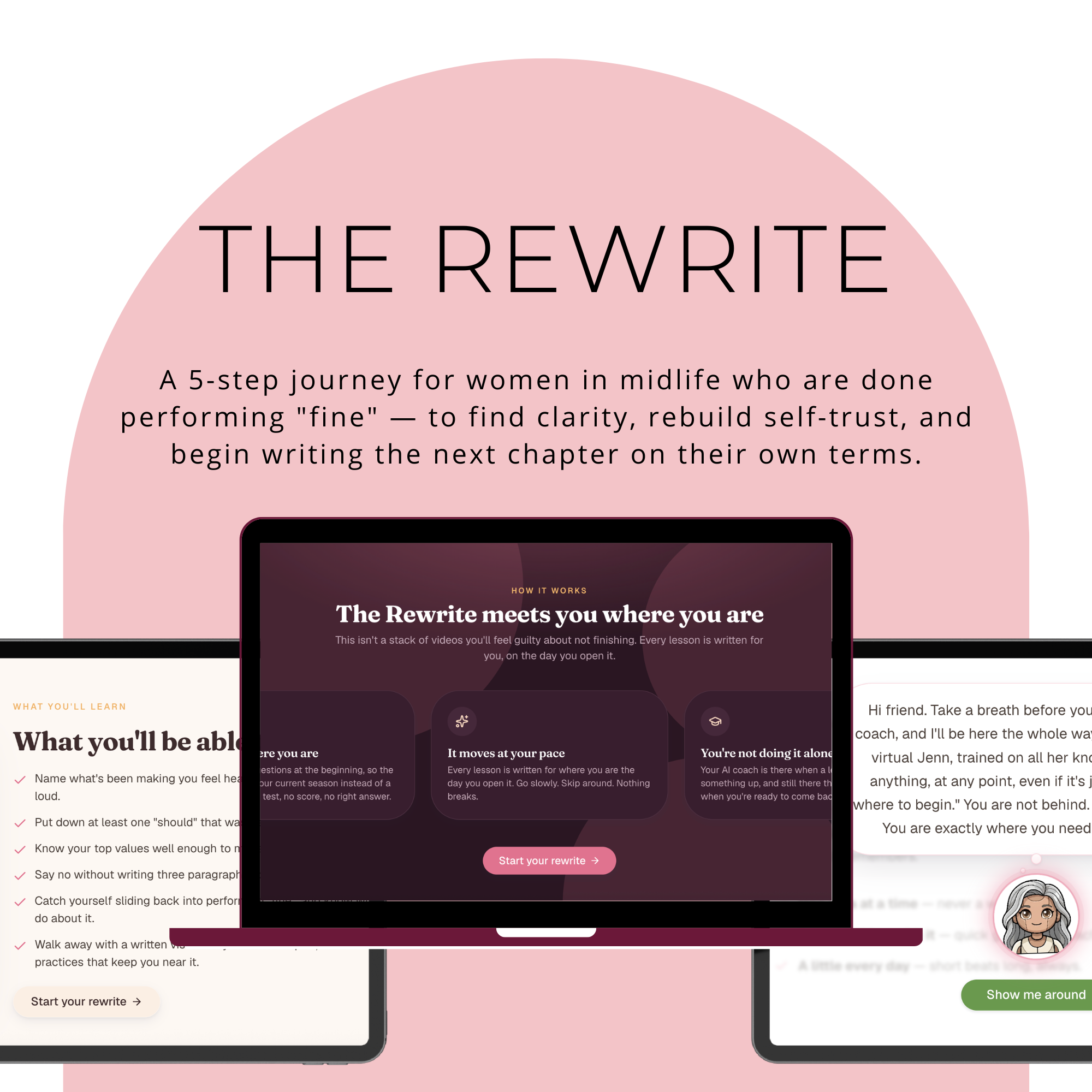
And when you're ready for what comes after the noticing — the actual doing — that's the work I walk women through in The Rewrite. It's the five-step path I wish I'd had: naming the fog, putting down the shoulds that were never yours, finding your own compass again. You can walk it at your own pace, or walk it alongside the rest of us in The Rewrite Room. No rush. The door's open when you are.
A Reflection to Sit With
If your body could make one decision for you right now — the one you keep waiting for an emergency to force — what would it choose?
Where to Go Next
Listen to the full conversation with Jen Fieldman on Episode 15 of The Comeback Show — the frog metaphor, the honest math of leaving, and the hormone conversation every midlife woman deserves. Listen here →
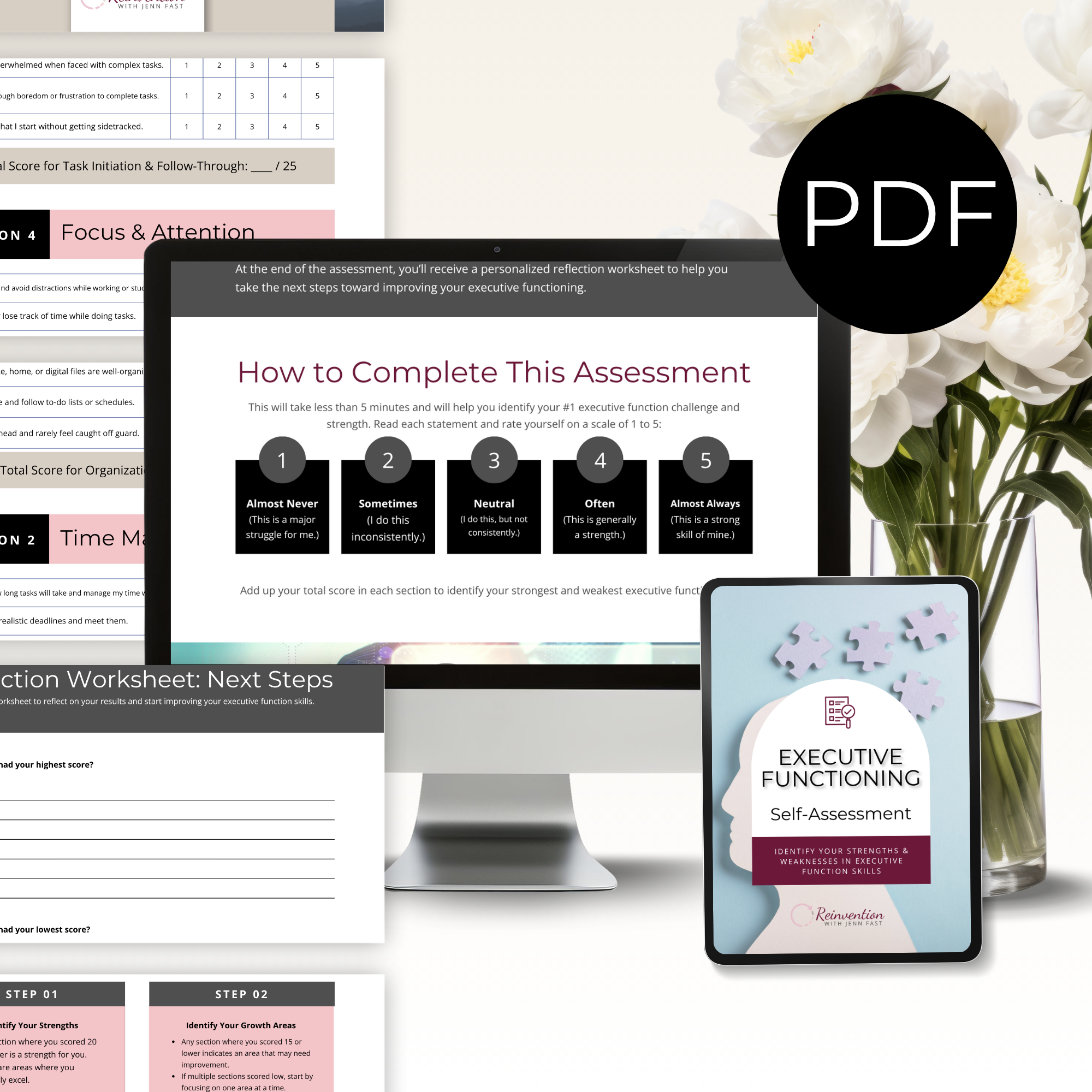
Take the free Executive Function Self-Assessment. If you've been explaining away your fog, this is a five-minute check-in that shows you where your capacity is actually going and what to protect first. Start the assessment →
Get each new piece in your inbox. I write these companion articles for every episode — the honest version, the one with the parts we usually leave out. Subscribe and they'll come straight to you. Join the email list →
Ready to actually walk it? The Rewrite is my five-step path out of the fog — self-paced, with an AI coach in your corner. Start The Rewrite → Or do it with company in The Rewrite Room →.
If this article named something you've been feeling but couldn't quite say, forward it to the friend you thought of while you were reading. That's how comebacks travel.


