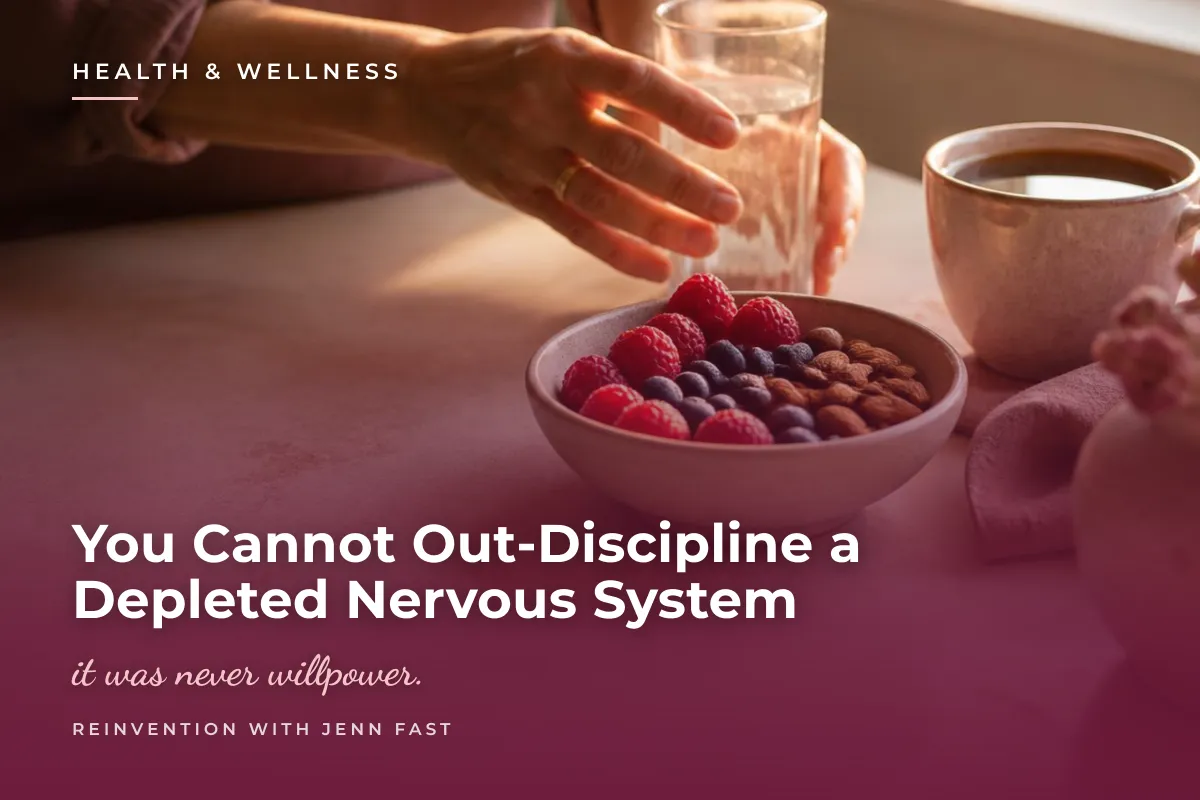
Food Noise & Sugar Cravings Aren't a Willpower Problem
The real reason food noise and sugar cravings get loud in midlife, and what to do instead
This one lives in the Reinventing Health corner of the work, and it comes straight out of the newest episode of The Comeback Show, my conversation with nutrition coach Laura Banks. If you have ever ended a long day at war with a cabinet full of snacks and lost, this is for you.
Contents
What my body was actually doing
Meet the woman who used to lock her classroom door
Food noise is not hunger, and that difference changes everything
The blood sugar rollercoaster, or why 5pm feels like an ambush
Why this hits neurodivergent and midlife women the hardest
This is not cheating. It is strategy.
The 5pm you already know
It is five o'clock, and you are standing in front of the open cabinet.
Dinner is not made. It is not even decided. The day has emptied you out, and now the one job left, feeding yourself, has landed on the most depleted version of you there is. Your nervous system is running on fumes, and fumes do not make good decisions. So the fastest, sweetest thing in the house starts to look like the plan, and an hour later you are quietly ashamed of how the evening went.
For thirty years, I thought that moment was proof I was weak.
It was not. Here is the sentence that finally set me free, and it is the one I want you to carry out of this article: you cannot out-discipline a depleted nervous system.
When you are running on empty, your healthy habits are not failing because you lack character. They are failing because your body is in survival mode, and survival mode does not care about your goals. It cares about the fastest way to feel okay in the next ten minutes.
I had to learn that the hard way.
What my body was actually doing
For years I heard all the advice. Eat better. Move more. Manage your stress. And I ignored every bit of it, because some part of me did not believe it applied to me.
I thought I was the exception.
I was not. I was just burnt out, and burnout is not simply being tired. It is a sustained biological stress response, and it had been quietly running my body for decades while I congratulated myself for looking fine on paper.
Underneath the paper, the bill was adding up. I am five feet tall, and over thirty years in a high-pressure career I gained sixty pounds, so every one of them showed. My sleep fell apart. A sleep study finally caught something with my heart, which is how I ended up across from a cardiologist who told me that unrelenting stress and poor nutrition had started to damage it.

Then he said the thing I did not expect. He told me to go home and decide whether my career was compatible with my health.
I quit five days later, with no plan.
That sounds brave. It was mostly desperation. But it cracked something open, because for the first time I understood that the thing I had spent thirty years treating as a character flaw was never a character flaw at all. It was biology I had never been taught to read.
That reframe is the whole reason I wanted Laura Banks on the show.
Meet the woman who used to lock her classroom door

Laura is a nutrition health coach who helps women quiet what she calls food noise, that constant inner monologue about what you should and should not eat.
She is a former third-grade teacher. And she told me something on this episode I have not stopped thinking about. For years, she would wait for the final bell, close the blinds, turn off the lights, lock her classroom door, and binge on the candy meant for her students. Five days a week.
What I love about Laura is that she refuses to shame anyone for any of it, because she has lived every bit of it herself.
She also brings the science, which my nerdy heart adores. And the science is where this stops being a story about weakness and starts being a story about biology.
Food noise is not hunger, and that difference changes everything
Here is the distinction that reorganized how I think about my own afternoons.
Hunger is physical. It is the empty, rumbly feeling in your stomach, your body telling you it needs fuel to keep you alive.
Food noise is different. It is that incessant desire to eat when you are not hungry at all. You could be completely full, just finished a meal, and still there is the voice: what am I going to eat next, should I have dessert, what is breakfast tomorrow. As Laura describes it, food noise makes it feel like food is following you around. Everywhere you turn, there are cookies, there is cake, there is the thing in the cabinet.
That voice is not a lack of discipline. It is your body asking for something it is not getting.
The blood sugar rollercoaster, or why 5pm feels like an ambush
Laura explained the mechanics so clearly that I finally understood myself.
You eat something sugary on an empty stomach. Your blood sugar spikes. Your dopamine and serotonin spike right along with it, so for a few minutes you feel wonderful.
Then it crashes. And it does not settle politely back to where it started. It drops below the baseline. That dip is the exact moment the whispers begin. Eat more sugar. We felt good a minute ago. Let's feel good again.
So you do. And it spikes, and it crashes, and the whispers come back. Up, down, up, down. That is the rollercoaster, and most of us have been riding it for years while blaming ourselves for not being able to get off.
Here is the part that reframed everything for me. When your body screams for sugar, it is usually asking for something else entirely. Protein. Fiber. Movement. A nap. A glass of water.
The craving is real. It is just a messenger pointing at the wrong door.
Laura's rule of thumb is that ninety percent of the time your body actually wants protein and fiber, and the rest of the time it wants movement, rest, or, this was my personal blind spot, hydration. She says to treat yourself like a toddler. You probably need a snack, a walk, or a nap.
Quick gut-check before you read on. Think about your own hardest hour of the day. Mine is late afternoon. What does your body usually reach for then, and what might it actually be asking for? Hold that question. The rest of this makes more sense with your own 5pm in mind.
Why this hits neurodivergent and midlife women the hardest
Now put stress back on top of the rollercoaster, because this is where my world and Laura's collide.
I am an ADHD and executive-function specialist, and here is what the research is blunt about: chronic stress measurably degrades your working memory, your decision-making, and your impulse control. That is not a motivational failing. That is your brain's command center browning out.
So at five o'clock, depleted and foggy with nothing left in the tank, of course you reach for the fastest fix in the cabinet. You cannot out-discipline a depleted nervous system, remember. The willpower you are reaching for is the exact resource stress burned through first.
If you are neurodivergent, you already know this terrain. ADHD brains run on dopamine, and sugar is the quickest dopamine hit in the house. The 5pm grab is not proof that you are broken. It is proof that your biology is working exactly as designed, in an environment that makes the sugar the path of least resistance.
And then perimenopause arrives and turns the volume up again. The hormone shifts make the cravings louder and more confusing, and your body genuinely needs more of certain things now, protein and good fats especially, because that is where your hormones are actually made. Laura and I both landed in the same place on protein: if you think it is only for the gym bros, you are the one going without the thing your body needs most.
For me, that looks like protein within the first hour of waking, something no one told me to do until a nutritionist did. Protein coffee in the morning is not a trend I can live without now.
And on the days when even that feels like a lot, I lower the bar instead of raising it. When you are this depleted, a bare-minimum habit is not settling. It is nervous-system protection.
Naming all of this is not making excuses. It is finally reading the instructions.
This is not cheating. It is strategy.
For a long time I let one specific thing stop me. I live in a house with people who are not on the same page.
Neither my husband nor my fifteen-year-old daughter has any interest in nutrition. And for years I let that be my excuse, partly because I did not believe I was worth the inconvenience I might cause.
Read that again, because I mean it. I did not believe I was worth the inconvenience.
It does not help that the world is full of people cheerfully handing you sugar. I know this better than most, because I once worked at the headquarters of a famous Seattle donut company. You would know the name if you lived there. Fresh donuts every morning, a plate on someone's desk by nine, staff meetings where the chef brought in new flavors for us to taste-test and rate, like it was a job, because it was. I gained ten pounds that year, and I promise you every single one of those donuts came with a friendly “oh come on, it's just one.” That voice does not stop at the office. It is at the party, the holiday table, the break room.
Laura said the thing that cuts straight through all of it. The most selfish thing you can do is refuse to take care of yourself, because you are quietly setting up the people you love to take care of you later.
So here is what I do now, and none of it requires anyone's permission.
I tell my family what I am doing instead of asking them to change. “I'm making some changes for my health, I'd love your support, but I'm doing this either way.” I keep it specific and small so it is not a referendum on the whole household. I expect a little resistance and I do not read it as a no, because people adjust. And yes, I quietly grate vegetables into the chili, the spaghetti sauce, the soup. My family does not watch the show or read these articles, so we will keep that between us.
None of that is cheating. It is strategy. You are allowed to take care of yourself without a vote.
Where to start, if you are where I was
You do not need a ten-step plan. You need one pause.
The next time the food noise gets loud, before you white-knuckle through it or give in and feel bad about it, stop and ask one question. What might my body actually be asking for right now?
Protein. Water. A walk. Ten quiet minutes that belong to you.
That is it. That is the whole first move. You are allowed to be on your own list.
If you want a running start on the protein part, Get the 60 High-Protein Snack Ideas →. It is my free guide to the exact kind of quick, satisfying snacks that answer what your body is really asking for, so 5pm stops being an ambush.
A question to sit with
Not a to-do. Just something to carry into your week.
Where in your life have you been calling a biological need a personal failing, and what would change if you believed the doctors, the coaches, and your own body the first time?
Resources
The Comeback Letter → my newsletter for women rebuilding their lives in midlife and beyond
Get the 60 High-Protein Snack Ideas → free guide, start here
Free Executive Function Self-Assessment → if the 5pm fog sounds familiar
Laura Banks: bhealthyhabits.com, @laura.b.healthy on Instagram and TikTok, and her podcast Isn't She Powerful, where I am a recent guest talking stress, boundaries, and burnout


