Fear or Strategy? How to Tell a Real Reason to Wait From Fear in Disguise
The Book I Almost Didn’t Publish
This article is a companion to Episode 24 of The Comeback Show, my conversation with Doing Coach Carrie Olsen, founder of The Doing Project. We covered a lot of ground in that episode. This piece takes the one idea I could not stop applying to my own life and turns it into something you can use today.
Content
The Book That Was “Almost Done” for a Year
The Reasons That Sound Like Strategy
The One Question That Sorts Them
What a Real Reason to Wait Feels Like
Why Incidental Friction Hits ADHD Brains So Hard
This Isn’t Laziness. It’s Protection.
The Book That Was “Almost Done” for a Year
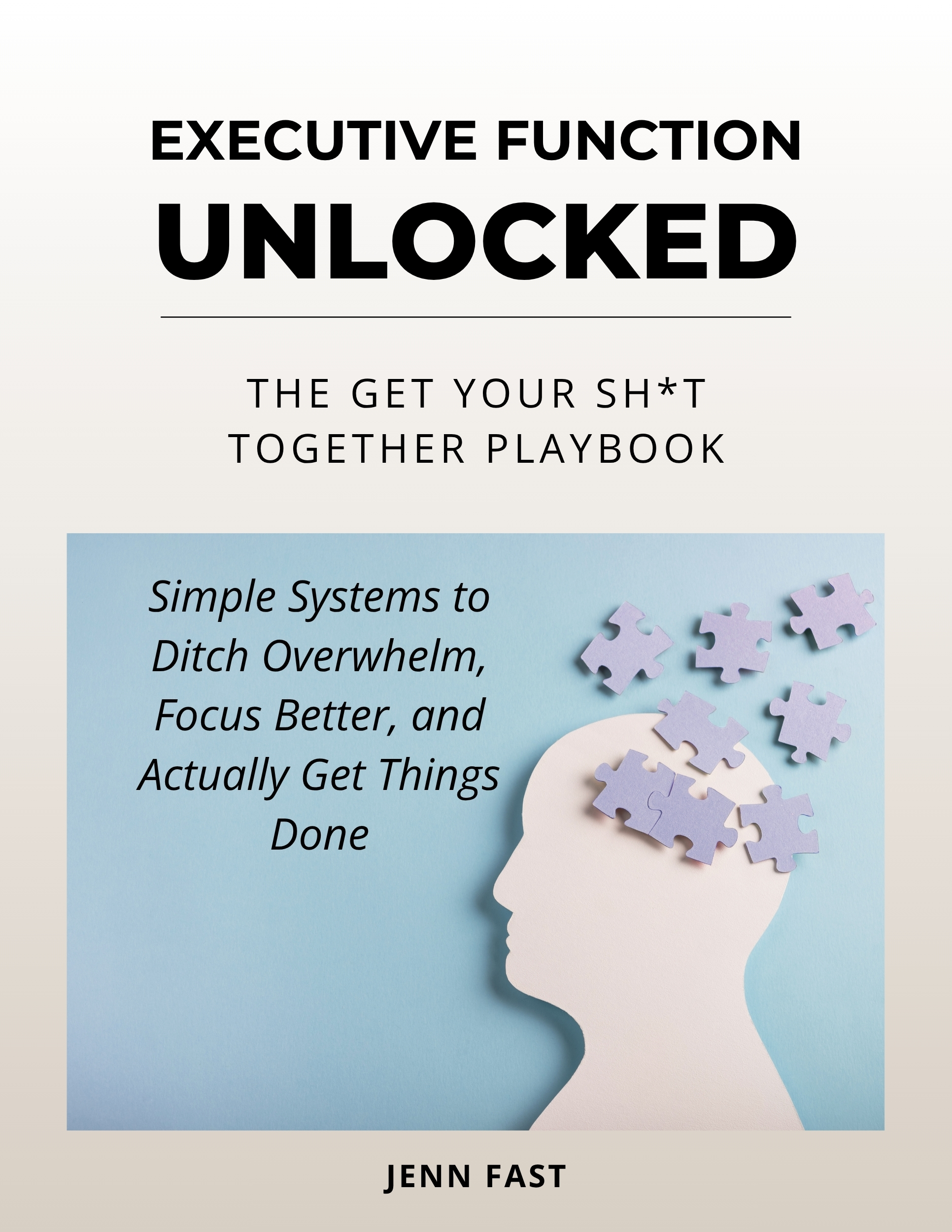
For more than a year, my book lived in a file I did not open.
Not a rough draft. Not an idea on a napkin. A nearly finished manuscript for Executive Function Unlocked, my first solo book, sitting quietly on my computer while I did everything else.
If you had asked me why, I had answers. Good ones. There was still too much work left to do on it. And everything else on my plate was a higher priority right now.
Both of those sounded like strategy. Neither one was true.
When I finally made myself open the file again, I bargained with myself first. I would “just” upload it to Claude and ask for a punch list of what was left. No commitment. No deadline. Just a list I could look at and close again.
The list was short. Embarrassingly short.
I felt two things at once: relief, and a sudden, slightly giddy motivation to see how far I could get before I stalled again. Two days later, the book was live on Amazon.
A year of “not yet.” Two days of doing.
The Reasons That Sound Like Strategy
Here is what I have had to admit since: I was not protecting my priorities. I was protecting myself.
I have contributed to other people’s books before. That felt safe. My name was on a chapter inside a project that belonged to someone else. This one was mine, start to finish, and the fear underneath every “not yet” was simple. What if it isn’t good enough? What if it isn’t original enough? What if people read it and decide I don’t know what I’m talking about?
Carrie works with exactly this kind of woman. Her clients are not short on skill or information. They are capable people who have done the preparation and still cannot release the work, sometimes for years. And the stall rarely looks like fear from the outside. It looks like diligence. Like responsibility. Like a very sensible plan.
That is what makes it so hard to catch. “I need to finish the website first.” “The timing isn’t right.” “I have too much on my plate this quarter.” Every one of those can be true. Every one of them can also be fear wearing a blazer.
So how do you tell the difference?
Two Kinds of Friction
Carrie teaches a distinction that changed how I look at every stalled project on my list. There are two kinds of friction.
Incidental friction is the stuff in the way. The login you have to dig up. The spreadsheet buried three folders deep. The planning tool you meant to use but never keep open. In Carrie’s example, sending one email means opening your browser, logging in to your email platform, writing the thing, and adding the tags and automations. None of it is hard. All of it adds drag.
Essential friction is the discomfort that comes from the work itself. The part where your name goes on it. The part where someone might not like it. Carrie’s point is that this is the friction worth leaning into, because walking through it is what actually changes you. The goal is not only to release one piece of work. It is to become the kind of woman who releases her work.
So here is the practical difference: incidental friction should be removed. Essential friction should be walked through, a little at a time.
The trouble starts when we mix them up. We treat essential friction like a logistics problem and keep “fixing” things that were never the issue. One more round of edits. One more course. One more tool. Meanwhile the real friction, being seen, sits untouched.
The One Question That Sorts Them
When a client gets right up to the line where she could deliver or not, Carrie asks one diagnostic question. In plain terms: is the thing holding you back a fear of how you are going to be seen?
Are you nervous about someone judging the project? Worried about what it will say about you?
If the answer is yes, that is essential friction. That is fear, and Carrie told me she will “very gently but adamantly” encourage you to work through it, because she has watched how freeing the other side is.
If the answer is no, and the reason is genuinely about your health, your safety, your money, your capacity, or a specific piece of the work you can actually name, then you may have a real reason to wait. And a real reason deserves respect.
When I ran my book through that question, the answer came back immediately and a little humbling. Yes. It was about being seen. The “too much work left” story fell apart the minute I looked at the actual list.
Quick pause: what is the project you have been calling “almost ready”? Name it in the comments below, or just say it out loud to yourself. You don’t have to do anything about it yet. Naming it is the first rep.
What a Real Reason to Wait Feels Like
I want to be fair here, because not every wait is a hiding place.
While Executive Function Unlocked sat in its folder, I was also working on a memoir, Come Back to Yourself. And I parked it. On purpose.
That one passes Carrie’s test. Parking it made room for me to finish the book that was ready. And honestly, the memoir’s story is not far enough along yet. I am still living lessons I know I will want in it. Waiting on that book is not me hiding from judgment. It is me letting the story finish happening.
Once I paid attention, the difference showed up in my body. The memoir wait feels settled, even spacious. I can think about it without my chest tightening. The other wait felt like a low hum of avoidance, the kind where you close the file a little too quickly. (If you want a body-based way to check your own waits, the two-door test I wrote about in Your Body Sends the Bill works beautifully here.)
Why Incidental Friction Hits ADHD Brains So Hard
Now the part I wish someone had told me years earlier.
My main ADHD struggle is task initiation. And to my brain, a piece of incidental friction is not a small speed bump. It is a large obstacle, and a very convincing reason not to start at all.
If my workout clothes are not laid out the night before, I do not do a shorter workout. I do not do a workout. If my day is not planned the night before, the next morning begins with a long delay while I make sure I am starting on the “right” things.
Here is the frustrating part. Once I do start, my ADHD becomes a superpower. I can focus deeply and produce a huge amount of excellent work in a single session. The book proved it: a year of not starting, two days of finishing.
So for women whose brains work like mine, the friction question has a second layer. Before you decide a stall is fear, check whether it is simply incidental friction your brain is reading as a wall. And before you decide it is “just” logistics, check whether you have been leaving that friction in place because it gives you such a respectable reason not to begin.
Often it is both. My book had both: a fear of being seen, and an unopened file with no clear next step. The punch list solved the second problem, and that gave me enough momentum to walk through the first.
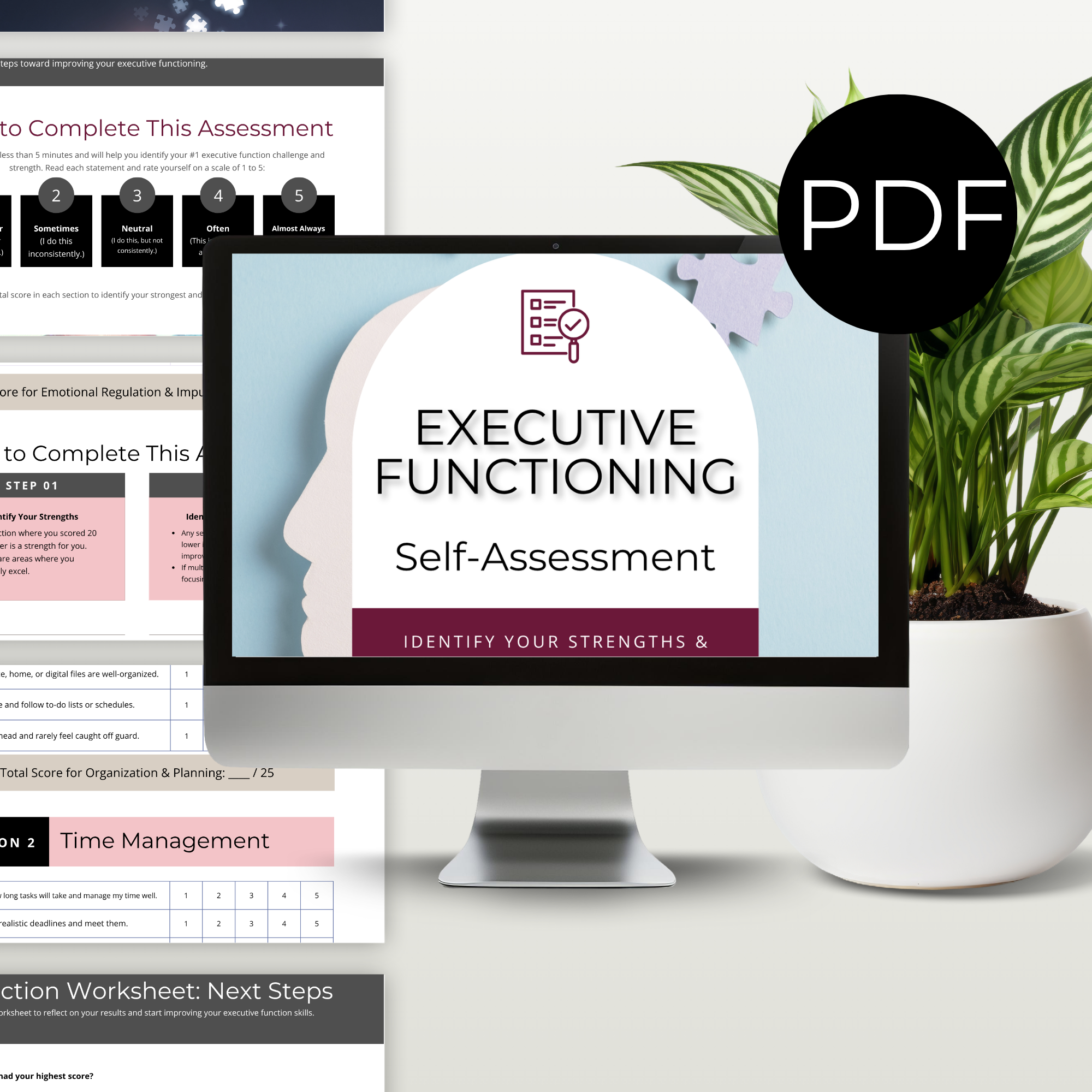
If you have never looked closely at how your own brain handles starting, planning, and follow-through, that is exactly why I built the free Executive Function Self-Assessment. It takes a few minutes and helps you see where your friction is most likely hiding, so you can stop blaming your character for what may be a setup problem. (It is a self-check, not a diagnosis.)
This Isn’t Laziness. It’s Protection.
Carrie said something in our conversation that I keep coming back to: every one of these blockers is rooted in virtue. There is always something good we are trying to do. We want the work to be excellent. We want to honor our priorities. We want to be responsible.
The problem is not the virtue. It is when we let it climb so high that it starts making the decisions.
So if you have been stalled for months, or for years, please hear this. You are not lazy, and you are not broken. You are a capable woman whose protective instincts have gotten very good at sounding like strategy. That is not a character flaw. It is a pattern. And patterns can be sorted, one honest question at a time.
Where to Start
Pick the one thing you have been waiting on. Just one.
Write down, in a single sentence, the reason you have been giving for waiting. Then ask Carrie’s question: is this about how I will be seen?
If the answer is no, and the reason is incidental friction, remove one piece of it this week. Lay out the clothes. Find the login. Ask for the punch list.
If the answer is yes, do not try to conquer it all at once. Carrie’s whole approach is built on reps. Release the smallest version you can survive (one paragraph, one page, one post) and notice that you did, in fact, survive it.
And if you need permission to start smaller than feels respectable, my “just get a punch list” bargain is the reason my book exists. Small steps count. I wrote more about that in You Don’t Have to See the Whole Staircase.
“If I Had Known It Was That Easy”
After the book came out, a woman booked time with me specifically to ask about my publishing process. She told me she had a book living in her mind and her dreams for a while, but finishing and publishing it felt so intimidating that she could not make any progress at all.
I walked her through what I did. When we were done, she said, “Wow, if I had known it was that easy, I would have finished mine long ago. I feel like I can do this now.”
I think about that often. Not because publishing a book is easy. Because the part that felt impossible from the outside, for both of us, was mostly made of fear and fog. Once it was named and broken into a list, it got very small, very fast.
Your thing might be smaller than you think, too.
A Question to Sit With
What reason have you been giving for waiting, and if you are honest with yourself, is it protecting your priorities, or protecting you from being seen?
Resources
Listen to the full conversation with Carrie Olsen on The Comeback Show, Episode 24: You Already Know What to Do (So Why Aren’t You Doing It?)
Carrie’s free guide to seeing the lies that keep you from doing your thing: thedoingproject.com
Find your friction: take the free Executive Function Self-Assessment
The book I almost didn’t publish: Executive Function Unlocked, in ebook, paperback, hardcover, and audiobook (narrated by me), plus the companion course
Read next: Your Body Sends the Bill and You Don’t Have to See the Whole Staircase
Get every new episode and story in The Comeback Letter: subscribe here


