When Doing Everything Right Stops Working
There Is No Syllabus for This
This article is the companion to Episode 21 of The Comeback Show with Dr. Marline Duroseau, a former CFO, doctoral researcher, and mom of four boys who spent 15 years of her climb living through infertility. I wrote about the part of her story she almost never tells in The Comeback Letter. This piece is about one sentence she said almost in passing, comparing infertility to school, that named something I had been circling for years. (The episode includes pregnancy loss, so please listen with care.)
The deal I signed before I could read
I don’t remember being taught that hard work pays off. I remember it as the air in our house.
Both of my parents said it, in a hundred versions, for as long as I can remember. Study harder. Do it again, better. Work hard and you’ll get there.
And for a long time, they were right.
That belief carried me through school. It carried me through two business degrees, earned while I was becoming a wife and a mother and working at the same time. It carried me through the early years of my career, when every extra hour seemed to come back to me as a better review, a bigger title, a little more room.
Put in the effort, get the result. It was the most reliable contract in my life.
So when it stopped paying out, I did the only thing the contract had ever taught me to do.
I worked harder.
A course with no syllabus
Dr. Mar knows that contract by heart. She took a payroll job at 21, as a college senior, and climbed at the same company all the way to Chief Financial Officer. The daughter of Haitian immigrants, she was raised on the same rule I was: get the education, get the good job, work your way up.
Then she and her husband set out to grow their family, and for ten years nothing worked. Appointments, diagnostic tests, surgeries, painful procedures. Then IVF.
When I asked her what surprised her most about life on the other side of all of it, she reached for a comparison I have not been able to put down.
“When you start school, as long as you do your work, you turn in your assignments, you stay the course, you’re gonna graduate with a degree. We know that, right? But with infertility you don’t know.”
There is no syllabus. You can do every assignment perfectly and still not know whether you will pass.
And that, she said, is what changed her. “That caused me to be very afraid. It caused me to second guess everything.”
Sit with that for a second. This is a woman who ran a finance organization. Who had never met a problem she couldn’t out-work. And what shook her confidence was not failing. It was discovering that effort and outcome were not actually connected, and that no amount of trying harder was going to connect them.
I think a lot of capable women are living inside a smaller version of that right now, without words for it.
I didn’t have the words for years.
When my own syllabus disappeared
My version looks nothing like hers, and I want to be careful not to pretend it does. Nothing I have lived compares to losing a daughter at 22 weeks, which Dr. Mar talks about with extraordinary honesty in the episode.
But I know what it is to keep turning in the assignments and watch the grade stop changing.
I have written before about the annual compensation conversations in my last corporate role [read Who Are You Still Performing For? here →]. Four years of hearing how valuable I was. One promotion and the basic raise. And always, a fresh list of reasons I wasn’t moving at the same pace as my peers.
So I worked harder. Then harder than that.
At the same time, my own brain started changing on me. At 51, I thought I was losing my edge. I forgot things I never used to forget. I started projects I couldn’t finish. I blamed perimenopause brain fog. I blamed stress. Mostly, I blamed myself.
And my answer to all of it was the same answer it had always been. More effort. Longer days. Stricter lists. Push.
When my last straw finally came, right before I left, what hit me hardest wasn’t anger. It was a quiet, almost embarrassing realization.
All that advice was a lie. Or at least obsolete.
“Work hard and you’ll get there” had been true once. It just wasn’t true anymore, and I was the last one to find out.
If you’re reading this and quietly counting the years you’ve been working harder for the same result, I would love to hear where that’s showing up for you. Leave a comment or hit reply. You are not the only one.
The prescription was the opposite
The real turning point came in a cardiologist’s office. I have told that story in full before [read Your Body Sends the Bill here →], so here is only the part that matters for this one.
Years of unrelenting stress, a lot of it fueled by that work-harder mindset, had done real damage to my heart. And the way out was not a better effort. It was the opposite of effort.
Work less. Stress less. Take care of myself first.
Every instinct I had said that was backwards. Effort was the thing that had always saved me. Now effort was the thing hurting me, and the treatment was to stop reaching for it.
Then, at 52, I was diagnosed with ADHD, and the last piece clicked into place. I hadn’t lost my edge. I had spent years as an executive assistant to the C-suite building systems for other people’s brains, and I had never built any for my own.
I didn’t need to try harder. I needed a different operating system.
Why trying harder backfires on a brain like ours
Here is what I wish someone had told me sooner.
Executive function is your brain’s command center: the set of skills that helps you plan, manage your time, start and finish things, stay focused, and handle your emotions. And “try harder” is not a strategy that runs outside of it. It runs on it.
When you tell yourself to just push through, you are drawing on the exact resources that ADHD, perimenopause, chronic stress, or a season of grief may already be stretching thin. You are trying to fix a depleted system by spending more of what it is low on.
That is why the effort contract fails so many midlife women at once. Not because we got lazy. Because the conditions changed, and the old deal was never written for this version of our lives.
Dr. Mar’s word for what she had to build instead is “adaptable.” She first learned it at 21, discovering that the real job didn’t look like the textbook. She leaned on it hard through infertility. And she says it plainly now: being adaptable is okay, because you have to be.
Adaptable is not the opposite of hard-working. It is what hard-working grows into when the syllabus is gone.
What I actually do now
My new operating system is not impressive. That is the point. It was built for a brain that is tired, interrupted, and still very capable.
The check-in. Before I start work each day, and then every couple of hours, I pause and ask one question: what do I need right now? And I give myself something the old contract never allowed: permission to change my plans based on the answer. When I check in regularly, stress doesn’t get to build silently all day until it explodes. I catch it while it’s still small.
Scheduled recovery. I used to treat rest like a reward I had to earn by finishing everything first. Which meant I never rested. Now recovery goes on my calendar like a meeting, even if it’s ten minutes on the floor of my office to stretch or breathe. Recovery isn’t a reward. It’s a requirement.
A way back in after interruptions. Since my diagnosis, focus has been its own project. Two things help most. I use Do Not Disturb with a time limit, usually 30 to 60 minutes, so I get deep focus with a built-in way back instead of disappearing into hyperfocus and forgetting to eat. And my next step always lives in writing, in my calendar or planner, so an interruption never costs me the whole thread. One glance and I know where I was.
None of these ask me to try harder. Every one of them asks me to try differently.
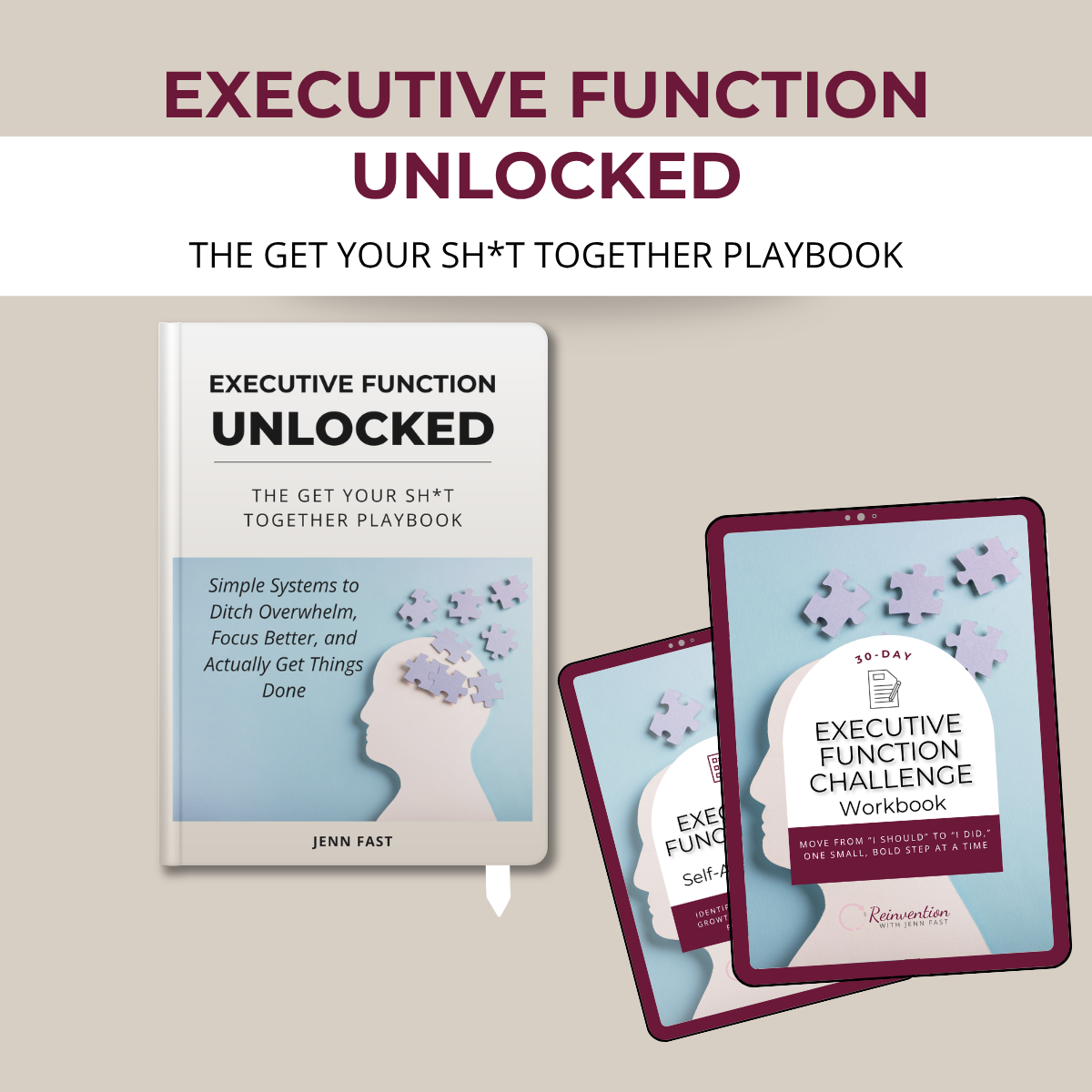
All three come from the two sections of my new book I lean on most: emotional regulation, and focus and attention. Emotional regulation is honestly what got me through finishing the book at all. If you want the whole toolkit, five pillars of executive function plus a self-assessment that shows you exactly where to start, Executive Function Unlocked is available now on Amazon →.
This isn’t lowering the bar
I know the voice that shows up when you read a list like that. The one that says checking in and scheduling rest is what people do when they can’t hack it.
I carried that voice for thirty years. It sounds a lot like our parents’ best intentions.
So let me say this as plainly as I can. Letting go of the effort contract is not giving up. It is not lowering your standards. It is what a smart, experienced woman does when the old rules stop matching the ground she’s standing on.
Dr. Mar didn’t get through infertility by trying harder at something that could not be out-worked. She got through it with science and with faith, with a therapist she still sees today, and by learning to take life “one day at a time, literally.” She did not stop being driven. She stopped believing drive alone would carry her.
You are allowed to stop believing it too.
Where to start
Don’t overhaul anything. Pick one place in your life where you have been trying to out-work a problem for months, maybe years, with no change in the result.
Then ask yourself a version of Dr. Mar’s question. Is this a course with a syllabus, where more effort really will move the grade? Or is it a season with no syllabus, where effort is the wrong tool entirely?
If it’s the second one, try a single check-in today. Set a timer for two hours from now. When it goes off, stop and ask what you need. Then let yourself act on the answer, even if it changes the plan.
That’s the whole first step. Small, steady changes stick. Overhauls don’t.
Something to sit with
Where are you still keeping your side of a deal that stopped paying out a long time ago?
Resources
Listen to my full conversation with Dr. Mar: What Nobody Tells You About Life After Infertility →
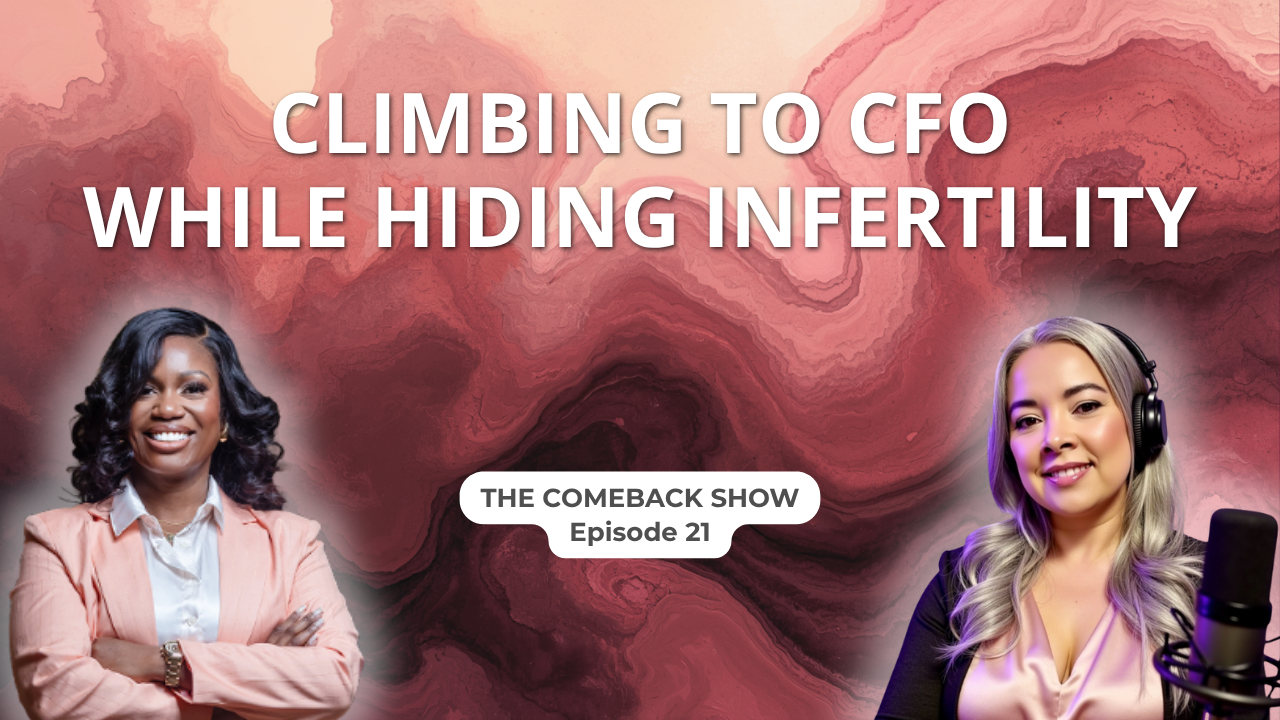
Find Dr. Mar’s free 3-step guide for navigating disruption in a leadership role, her book It’ll Happen By Thirty, and her coaching: linktr.ee/mcduroseau →
Get my book, Executive Function Unlocked: The Get Your Sh*t Together Playbook: on Amazon →
Read next: Your Body Sends the Bill [read it here →] and Who Are You Still Performing For? [read it here →]
Get a new Comeback Show conversation every other week in The Comeback Letter: subscribe free →


