Why Slowing Down Was the Shortcut I Spent 30 Years Refusing to Take
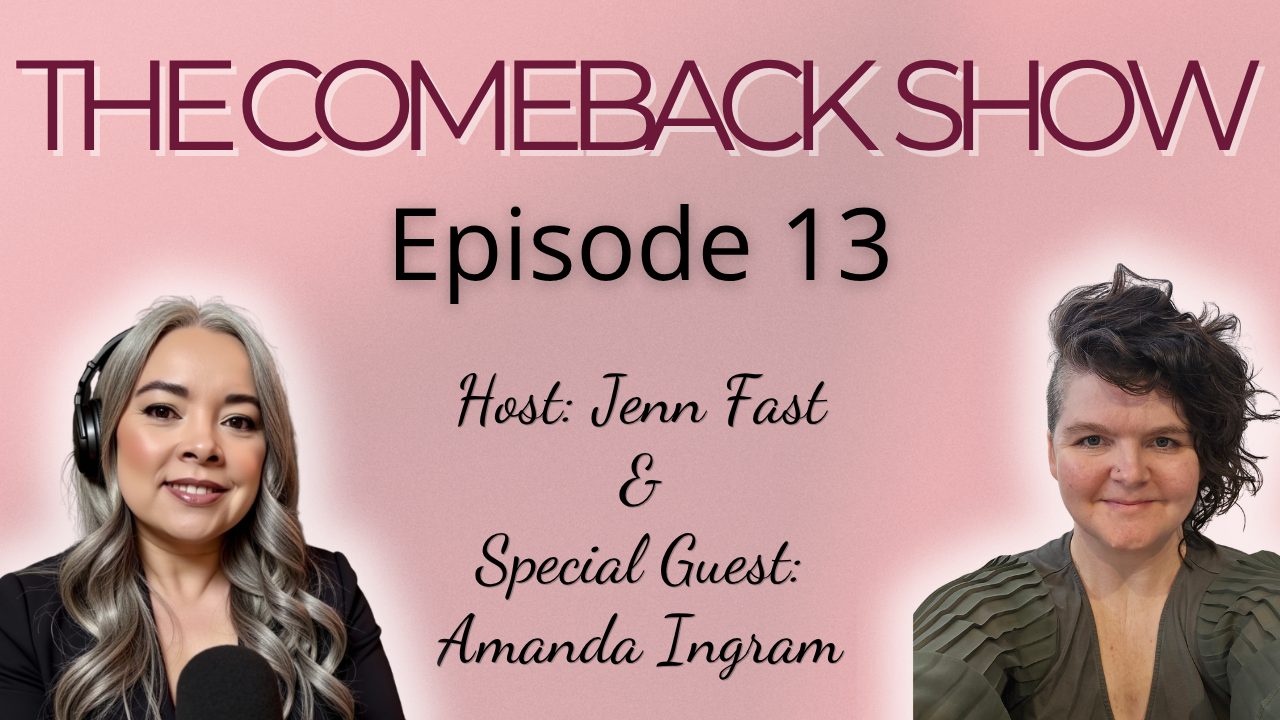
This article goes with the latest episode of The Comeback Show, my conversation with Self Discovery Coach Amanda Ingram. If you’d rather watch or hear it than read it, the full episode is linked at the bottom. But I wanted to put some of this on the page too, because the part I keep coming back to is the part nobody warns you about.
Survival Mode vs. Soul Exhaustion: Why Slowing Down Is the Shortcut Through Burnout
Amanda Ingram and I left our corporate careers within a few months of each other.
Neither of us had a plan. Both of us ended up coaching women through the exact reinvention we were stumbling through ourselves. And both of us landed, eventually, in the same place.
But we got there by almost opposite roads.
Amanda quit her television industry job after her second daughter, then pushed straight into building something new. She kept going until she burned out so completely that her body simply stopped cooperating. She had to crash before she could hear herself again.
I got handed a runway.
A cardiologist looked at me and said the sentence I still have not been able to unhear: Jennifer, it is time to decide whether your job is compatible with your health. I quit shortly thereafter. Thirty years in corporate, the last 10 on the executive support side, gone. And my husband sat at the kitchen table and said, “Rest first. If you want to build something after, great. If you don’t, just heal.”
Two roads. Same destination. And the same hard-earned conclusion about what actually moves a high-achieving woman forward when the old strategies stop working.
Slowing down is the shortcut.
I know how that sounds. I resisted it for three decades. So let me tell you what it actually looked like.
The rest part felt awful, at times
Everybody romanticizes the pause. Nobody tells you it feels like withdrawal.
For the first three months I went to doctor’s appointments, worked out, cooked actual meals, strolled through my own back yard, and went to therapy. And I often felt useless. Guilty. Itchy in my own skin. The instinct to start a business immediately was screaming at me every single day.
I remember the morning I decided to do grocery pickup instead of walking the aisles myself. Such a small thing. But I sat there feeling guilty, because in theory I had all the time in the world to go do the shopping the “real” way. I just didn’t want to.
I mentioned it to my husband, and he reminded me that this entire chapter was about doing what I wanted and skipping what I didn’t. I didn’t answer to anyone anymore. If I wanted to skip the long checkout line, I was allowed.
And then something shifted on the drive home from one of those pickups.
I realized that right at that exact moment, most of my former coworkers were halfway through their commute downtown, white-knuckling it into the office. And I got to go home.
That was the moment it landed. I hadn’t escaped my responsibilities. I had finally started living the life I’d earned.
The difference between survival mode and soul exhaustion
Here’s the trap I lived in for years, and the one Amanda named so clearly in our conversation.
There’s survival mode, and there’s soul exhaustion. They look identical from the outside. They need completely different responses. And the wrong response is what keeps women stuck for years.
Survival mode is the bone-tired, putting-yourself-last, going-through-the-motions exhaustion. A nap and setting a boundary actually help.
Soul exhaustion is what’s still there after you took the nap and drew the boundary. You did all the right things and you still feel hollow. You’re still quietly asking, who even am I underneath all of this.
I can see my own pattern now with the clarity hindsight gives you for free.
In every single role I ever had, I would wait a year or two to build up my vacation bank. I’d finally take that week off I’d earned. And I could not relax. Could not stay off my email. Could not unplug. I never came back rested.
Even in the last five years, when I had real flexibility, working from home a couple days a week, flexing my hours to my energy, even taking the occasional afternoon nap, none of it touched the thing underneath. It didn’t help me sleep. It didn’t relieve the stress.
That’s the tell. When more rest, more flexibility, and better boundaries still don’t move the needle, you’re not under-rested. You’re soul exhausted. And soul exhaustion isn’t solved by self-care. It’s solved by becoming a different person on purpose.
If you’re reading this and quietly recognizing yourself, I’d love to hear which one you think you’re in. The comments are open, and you will not be the only woman there.
My body kept telling on me
The reason slowing down is a shortcut and not a detour is that the alternative costs you more time, not less.
Every time I tried to skip the rest and sprint into building, my body told on me.
I’ve built a daily routine now that honors my actual capacity and all the healthy habits I worked so hard to put in place. And any time I let myself get too busy to keep it, the whole thing unravels in a predictable cascade.
It starts with telling myself I don’t have time for my workout, so I skip it. Then I can’t fall asleep that night. So the next day my energy is lower. Cortisol spikes, my appetite climbs, and I’m suddenly not eating the way I know I need to. Less movement, worse sleep, worse food. Around and around.
It is completely unsustainable. And the second I notice it and shift back to my normal rhythm, I start feeling like myself again.
Sometimes that means I can’t hit a deadline. Sometimes it means I pass on a collaboration I was genuinely excited about, or I don’t launch the thing on the day I wanted to. And every time, I have to remind myself: this is the entire reason I left corporate America. I built a life that flexes with me. Overriding that to prove I can still sprint is just the old life in a softer outfit.
How I knew self-trust was coming back
Amanda and I have completely different coaching frameworks. Hers is Find Your Spark. Mine is The Rewrite. We built them separately, from different directions. And both of them end in the exact same place: self-trust.
For Amanda’s framework, it sits at the end and not the beginning. In my framework, it’s the first thing we work on. Neither is right or wrong. But it is important because you can’t trust yourself until you’ve remembered who you are. And you can’t remember who you are while you’re still performing the role you’ve performed for twenty years.
For me, the proof didn’t show up in some dramatic decision. It showed up in the smallest moments of an ordinary day.
There were afternoons I didn’t feel well, or was just bone-tired, and I’d choose to skip a chore and rest instead. For months, I felt guilty every single time, even with my whole family reassuring me that my schedule was entirely mine to run.
Then came the day I realized I did not have the capacity to do the dishes, clean the house, or make dinner, and I lay down on the couch with a good book instead. And I didn’t feel guilty.
That was it. That was the moment I knew I’d arrived. Self-trust was back online. Because as soon as I started feeling better, I had my evidence: I could make good decisions for myself. I could be trusted with my own life.
The diagnosis that reframed everything
Here’s the piece Amanda and I both kept circling, because we’re not just women who serve this audience, we’re women who live in it.
I was diagnosed with ADHD at 52. Right alongside years of perimenopause and the chronic stress that had quietly broken my executive function.
That diagnosis made sense of so much. All those years my executive function was simply overwhelmed and not working, and I called myself lazy for not powering through. All the times I couldn’t initiate a task and assumed it was a character flaw.
Once I finally slowed down, it got so much easier to actually listen to what my body was telling me. I could pause and check in throughout the day and ask what I needed. Sometimes that was a walk outside. Sometimes a high-protein snack. And sometimes I felt great and got to ride the hyperfocus straight through whatever I was working on.
The relief came from knowing that none of my lack of capacity was my fault.
The grief came right behind it, from knowing how differently I could have treated myself all those years if only I’d understood.
But the lesson I want you to take is the one I had to learn: don’t blame yourself for what you didn’t know. Now that you do know what your brain and body need, you get to build a life that gives it to them. That’s not a limitation. That’s the whole advantage.
Where to start, if you’re where I was
You don’t need a ten-step plan. You need one thing.
This week, ask yourself one honest question: Would some extra sleep and one good boundary actually fix how I feel?
If the answer is yes, take the nap. Genuinely.
But if the answer is “sure, but what else is there,” then you’re not under-rested. You’re soul exhausted. And the move isn’t to push harder. It’s to stop digging in the wrong direction and let yourself slow down enough to hear your own voice again.
It’s still in there. I promise you it didn’t go anywhere. It just got buried under everyone else’s.
Listen to the full conversation
Amanda said something in this episode I haven’t stopped thinking about: your wisdom is always there, your light is there, but it gets buried under all the other voices. And when you’re pushing and spinning and chasing, you can’t hear it. Slow down even a little, and it comes back.
If you’ve tried harder, slept more, drawn the boundaries, and you’re still asking who you are underneath all of it, this episode is for you.
🎧 Watch or Listen to “When Slowing Down is the Shortcut” with Amanda Ingram →
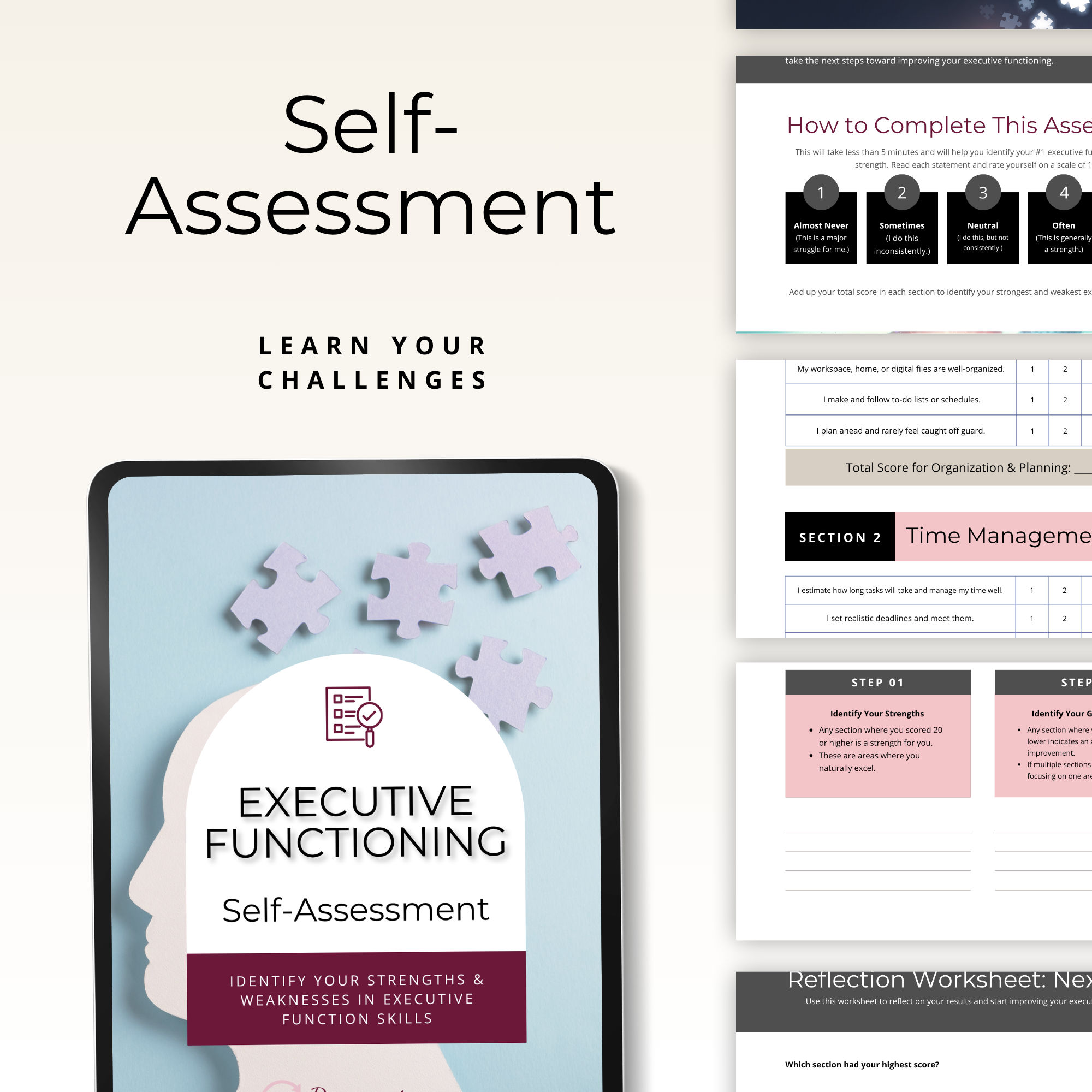
And if your brain feels like part of what keeps tripping you up, my free Executive Function Self-Assessment → will help you name your specific strengths and gaps in about ten minutes. It’s the first thing I point women to, because you can’t work with your brain until you understand it.
If you want each new piece like this one delivered straight to you, subscribe to The Comeback Letter →. It’s where I write honestly about rebuilding a life in midlife, no guru nonsense, just one woman a few steps ahead on the same road.
Sit with this
Not “here’s what to do.” Just this, to carry into your week:
What have you been calling laziness that might actually be your body asking you to slow down?


