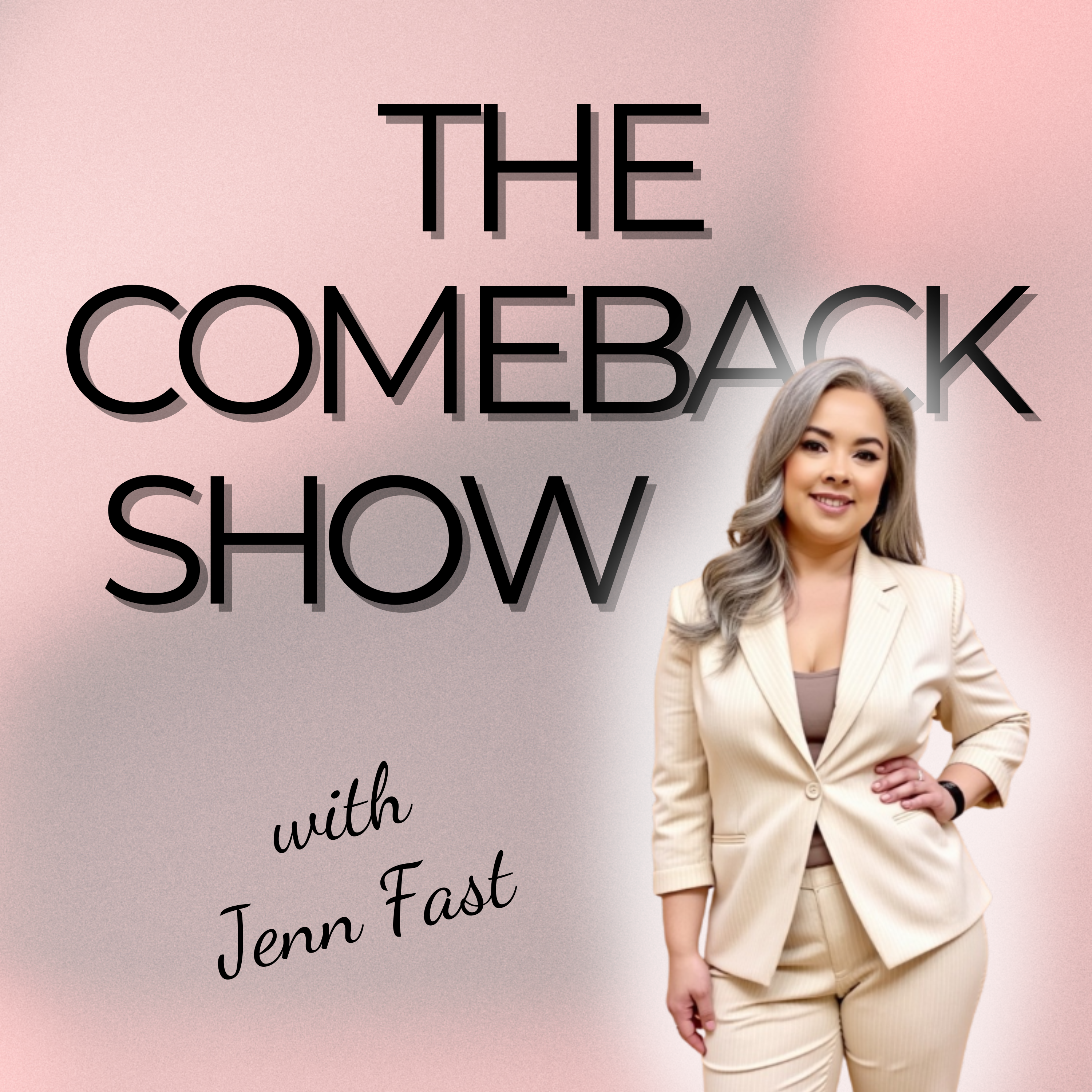
How I Went from AI Skeptic to True Believer—And Why It Transformed My Business
This is Part 2 of the Entrepreneurship Behind-the-Scenes series—a vulnerable, practical look at how I'm actually building this business in real time. If you missed Part 1 on simplifying my tech stack, you can read it here. Today we're going somewhere more personal: AI. And specifically, how someone who is usually an early adopter ended up being one of the last to fully commit—and what finally changed my mind.
By most standards, I'm an early adopter.
New platforms, new tools, social media, new ways of doing things—I'm usually in early, sometimes too early, learning as I go and dragging a few friends along for the ride. It's just how I'm wired.
So it might surprise you to know that I was late to AI.
Not because I hadn't noticed it. Not because I hadn't seen the posts, the breathless claims, the before-and-after productivity screenshots flooding every entrepreneurship feed on the internet. I'd seen all of it.
I was late because my life, at the time I should have been diving in, did not have room for one more learning curve.
I was managing extreme stress, a demanding job, and a side business I was trying to grow on the margins of an already overstretched schedule. The idea of adding learn an entirely new category of technology to my plate felt physically impossible. And if I'm being honest, there was also a workplace element at play. In my corporate role, we were actively discouraged from using AI at first—confidentiality concerns, guardrails that hadn't been established yet—and my boss, an executive who prided himself on being people-first, made no secret of the fact that he viewed AI with skepticism.
I understood the instinct. I shared some of it.
But underneath the practical barriers, there was something quieter I hadn't fully examined: I was afraid it would make me sound fake.
Not in a vague, theoretical way. In a specific, this matters to me way. My voice—my actual way of writing and showing up and connecting with people—had taken years to develop. It was the thing people mentioned most when they told me what kept them coming back. The idea of outsourcing any part of that to a machine felt like a betrayal I wasn't ready to make.
So I waited. And watched. And stayed skeptical.
The First Crack in the Wall
The first time AI actually worked for me wasn't dramatic. It was a meeting agenda.
My workplace had finally approved the use of an integrated AI tool—with strict guardrails, appropriate use cases only—and I decided to try it for something low-stakes. I typed in the context, the goals, what I needed to cover. What came back was clean, logical, and faster than anything I would have produced by staring at a blank document and convincing my ADHD brain to start.
Then something shifted that I hadn't expected.
I started using it to develop examples for my team—concrete ways we could apply AI in our specific work context. I brought prompts to our meetings. We tried them together, compared results, refined the language, shared what worked. What I'd originally approached as a solo productivity experiment became a shared learning process. And I was energized by it in a way I hadn't anticipated.
But the real door opened later—on my own time, for my own business, without any restrictions.
Where It Actually Changed My Business
Here's what my content creation process looked like before AI:
An idea would arrive. I'd sit with it. Then I'd sit with it some more. I'd open a document, write a few sentences, decide they were terrible, close the document, come back two days later, repeat. A single article could take days. A podcast script, longer. The gap between I have something to say and I have a finished piece was wide enough to lose all momentum in entirely.
Here's what it looks like now:
I find an idea that genuinely excites me and start exploring it with an AI tool—not asking it to write my content, but asking it to think with me. We generate angles together, I save the ones that resonate to a Notion page, and then I do the step that matters most to me: I ask the AI to give me writing prompts that will pull in my own knowledge, experience, and voice. That's the key distinction. The prompts don't replace what I know. They help me access it faster.
From there, I write in my own words. When I have a draft, I use AI to check the architecture—transitions, logic, intro, conclusion, calls to action. Does it land? Does it actually sound like me?
Consistently: yes. And often better than before, because when I'm not white-knuckling my way through task initiation and a procrastination spiral, I write with more clarity. I'm in the work instead of fighting to get there.
Articles that used to take days now take hours. Podcast scripts, newsletters, social media content—same. The most unexpected outcome? I want to keep going. The process doesn't feel like work in the old way. I'm showing up consistently, and it shows. My audience started saying things like, "I see you producing so much great content—how do you do it?" My follower growth started climbing. My reach expanded in ways that simply weren't happening before.
Where are you with AI right now? Skeptical? Curious? Already using it but wondering if you're doing it "right"? Come share in the comments or on any of my socials—I've been asking this exact question, and the conversation is one worth joining.
The ADHD Factor (Or: Why This Is a Bigger Deal for Neurodivergent Brains Than People Realize)
I want to pause here, because I think this part is important.
For those of us with ADHD—and I know my community includes a lot of you—the benefits of AI aren't just about saving time. They're about working with a brain that is fundamentally different in how it initiates, sustains, and completes tasks.
My particular flavor of ADHD comes with multiple passions, an endless stream of ideas, and a hyperfocus that, when it's engaged, is genuinely one of my greatest strengths. It also comes with task initiation blocks that can make starting feel impossible, even when I care deeply about the work. It comes with overwhelm when too many ideas are competing for the same limited bandwidth. It comes with the specific torture of watching a deadline approach while being somehow unable to begin.
What AI does, practically, is remove the activation energy required to start.
Instead of a blank page and a blinking cursor, there's a conversation. Instead of spinning between twelve competing ideas, I can ask—quite literally—based on the goals I've shared with you, what should my highest priority focus be right now? And it answers. Clearly. Without judgment. Without the shame spiral that used to be my constant companion in procrastination mode.
It also keeps my thinking organized in a way that used to take enormous effort. When my thoughts are spinning and fragmented, AI helps me find the thread. And once I have the thread? My hyperfocus takes over and does what it does best.
AI has become the key to harnessing my ADHD—not managing it, not working around it, but actually using it as the advantage it is. That distinction matters to me enormously.
For neurodivergent women building businesses—often without the executive function scaffolding that more linear thinkers take for granted—this is not a small thing. It's a genuine game-changer.
"Did You Ever Feel Guilty About It?"
People ask me this. The honest answer is: no.
The results made guilt impossible.
The thing that makes AI work for me—and the thing I'd encourage you to consider if you try it—is treating writing prompts as a non-negotiable part of the process. Not "write this article for me." Instead: "give me prompts I can use to share my own perspective, expertise, and lived experience on this topic." Then I answer those prompts in my own words. The AI shapes, structures, and refines. The content that comes out of it? That's mine.
That's not cheating. That's a good creative process.
And the proof is in the audience response. People who've been reading me for years haven't noticed a change in my voice—except to say there's more of it, more consistently. That's not an accident. That's what happens when you stop drowning in the production process and can actually focus on what you have to say.
The Permission Reframe
Here's what I know now that I didn't know when I was resisting:
AI doesn't diminish your voice. Used intentionally, it amplifies it—because it removes the friction that was drowning it.
When I'm not fighting task initiation for two hours before I can write a single sentence, I write better. When I'm not spending an afternoon on keyword research, I have more energy for the story only I can tell. When I'm not spiraling on the blank page, I'm actually in the work.
The AI cannot replicate what you bring. Your lived experience. Your hard-won perspective. The specific moment from last Tuesday that perfectly illustrates your point. The way you say something that makes someone reading it feel genuinely seen. None of that lives in a machine.
What AI can do is make sure you have enough left in the tank to bring it.
That's not a shortcut. That's a strategy.
Where to Start If You're Still on the Fence
I know some of you are where I was—interested, but skeptical. Or depleted, and not sure you have bandwidth for one more experiment.
Here's what I'd suggest: don't overhaul anything yet.
Pick one place where you regularly get stuck. One piece of content that always takes longer than it should. One task that stalls your momentum every single time.
Next time you hit that wall, try this: open an AI tool and type, "Here's what I'm trying to create. Give me five prompts I can use to share my own expertise and experience on this topic."
Answer the prompts in your words.
That's it. You don't have to commit to a workflow or decide what AI "means" for your business. You just have to start one conversation.
See what's on the other side of it.
What's Coming Next in This Series
We're still going behind the scenes.
Coming up:
Energy-aligned work rhythms—what a real workweek looks like when perimenopause is part of the equation, and how I course-correct without shame
The rebrand consolidation win—what finally merging three brands into one has freed up (mentally, not just logistically)
Collaboration as your list-building engine—how I'm growing my audience through strategic partnerships, not paid ads
If you're not on my list yet, now is the time to change that. You'll get each new piece in the series directly to your inbox, plus everything else I share with my inner circle that doesn't make it to social media. [Add your name to the list →]
Reflection Prompt
Where in your work—or your life—have you been doing something the hard way because accepting help felt like it disqualified you from the credit?
You deserve the credit and the support.
Those aren't opposites.
And please remember, you're never too late to learn something new. You also never have to learn it all at once.
I'm cheering you on and with you every step of the way,
Jenn Fast
Part 2 of the Entrepreneurship Behind-the-Scenes series. Read Part 1: How I Simplified My Tech Stack: From Too Many Tools to One Platform →
Resources & Community
Join the Reinvention with Jenn Fast Community — where real conversations about AI, neurodivergence, and entrepreneurship are already happening
Subscribe to the newsletter — behind-the-scenes content, frameworks, and real talk directly to your inbox
Subscribe to The Comeback Show podcast and newsletter — the official newsletter and podcast of Reinvention with Jenn Fast—a sanctuary for those in transition, led by lived experience and wisdom.